What we repair on a shred truck
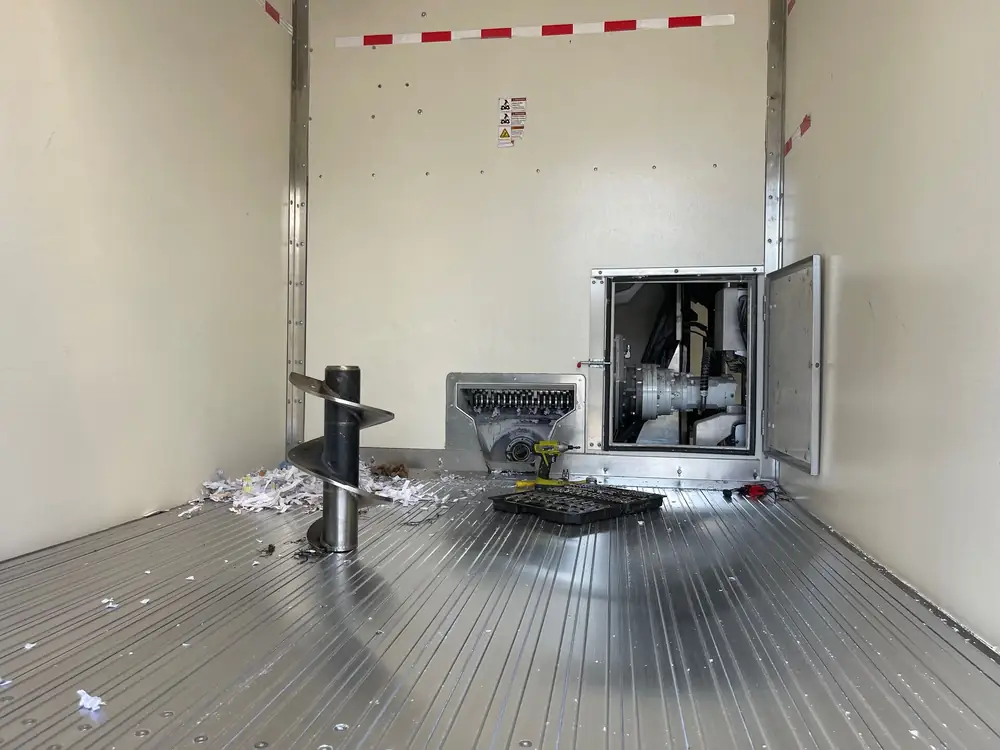
A mobile shredding truck is a shredder, a hydraulic system, a lifting system and a set of controls built onto a commercial chassis. Each one has to work with the others, and that is where OEM-level knowledge pays off: Cam spent years at the largest manufacturer of shredding trucks and knows how these systems are designed to work together.
Shredder & cutting chamber
Cutters, shafts, bearings, seals, gearbox and screens. Jams, stalls, rough cut and noise.
Cutting chamber rebuilds →Hydraulic system
Pump, motors, valves, cylinders, hoses, cooler and filtration. Leaks, heat, low power.
Hydraulics & PTO →PTO & driveline
Power take-off engagement, shafts, U-joints and vibration between the chassis and the pump.
Hydraulics & PTO →Bin lifter / tipper
Chains, cylinders, pivots, sensors and safety interlocks on the bin lift or bin tunnel.
Bin lifters & walking floors →Discharge & walking floor
Ejector and moving-floor unloading systems that empty the body at the plant.
Walking floors →Electrical & PLC controls
Control panels, sensors, wiring, fault codes, interlocks and operator controls.
Hard drive shredders
Truck-mounted media shredders used for on-site hard drive and SSD destruction.
Hard drive shredders →Common shred truck problems
| What the driver sees | Where it usually comes from |
|---|---|
| Shredder stalls, reverses over and over, or jams on normal paper | Worn or damaged cutters, a stripper or comb out of place, low hydraulic pressure, or a control setting |
| Shredding is slower than it used to be | Pump or motor wear, a relief valve issue, clogged filters, or dull cutters |
| Hydraulic oil runs hot, or the system loses power late in the day | Cooler or fan problems, low oil, internal leakage, or restricted filters (see our article) |
| Bin lifter is jerky, slow, drifts down or will not cycle | Cylinder seals, valve or sensor faults, chain wear, or a safety interlock |
| PTO will not engage, or there is a whine or vibration under the truck | Engagement controls, the PTO unit itself, or worn driveline joints |
| Fault lights or codes on the control panel | Sensors, wiring, switches or the controller — diagnosed on site |
| Paper particle size is larger than it should be | Cutter or screen wear — a compliance risk as well as a quality one |
How a repair visit works
- Call or send a request. Tell us the truck make and model, what it is doing, and where it is. Photos or a short video of the problem help.
- We plan the visit. Cam talks through the likely causes so the right parts and tools come on the first trip.
- On-site diagnosis and repair at your yard, shop or a safe location on your route, using OEM or high-quality parts.
- A written service report with what was found, what was done, and anything that should be watched or scheduled next.
Trucks we service
We work on the major mobile and plant shredding platforms, including Shred-Tech®, Alpine Shredders®, Allegheny® and Vecoplan® equipment, and more. If your truck is a less common make, call anyway — the hydraulic, driveline and control systems follow the same principles.
Where we work
CMB works regularly across the Central and Eastern U.S. and travels anywhere in the country by arrangement. Preventive maintenance customers get scheduling priority; emergency calls are handled based on location and the current travel schedule. See service areas.
Running a shredding plant as well as trucks? See plant-based shredder repair.
Truck down, or need a second opinion on a repair quote?